mirror of
https://github.com/ByteWelder/Tactility.git
synced 2026-10-17 02:45:05 +00:00
 c3bcf93698
- Refactor the way apps work: Instead of a C interface, they are now C++ classes. The main reasoning is that attaching data to an app was cumbersome. Having different implementations for different kinds of apps was cumbersome too. (3 or 4 layers of manifest nesting for the TactilityC project)
- External apps are still written in C, but they get a createData/destroyData in their manifest, so:
- External apps now have their own manifest.
- All functions in the original AppManifest are removed and replaced by a single `createApp` function
- External apps now automatically register (each app individually!) when they run the first time. As a side-effect they become visible in the `AppList` app!
- Adapted all apps for the new interface.
- Adapted all internal logic for these changes (Gui, ViewPort, Loader, AppContext, AppInstance, etc.)
- Rewrote parts of Loader to use std::shared_ptr to make the code much safer.
- Added a refcount check for the `AppInstance` and `App` at the end of their lifecycle. Show warning if refcount is too high.
Overview
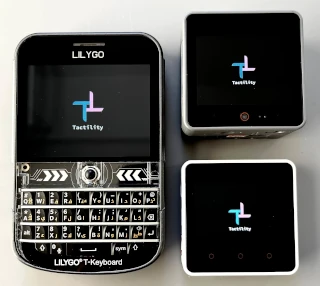
Tactility is an operating system that focuses on the ESP32 microcontroller family.
See https://tactility.one for more information.
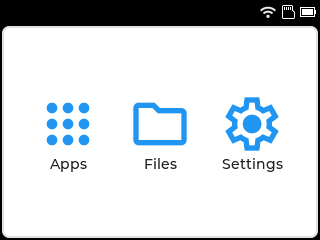
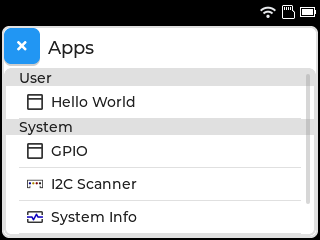
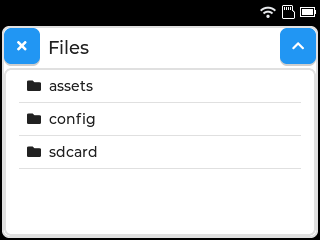
You can run built-in apps or start them from an SD card:
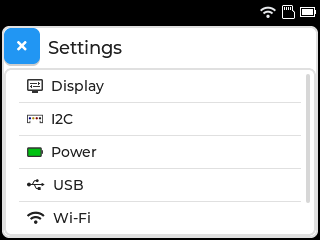
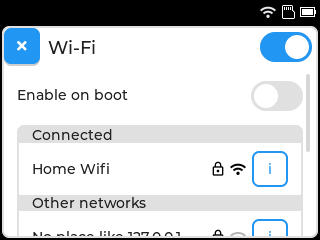
It's easy to manage system settings: